Did I say that there is an incredible amount of amazing scenery, geological formations and history to explore in SW South Dakota? Our first day in the area, Renee Krahn, Tom and I toured Jewel Cave National Monument. Our last day, we toured Wind Cave National Park, which abuts Custer State Park and made our way south to Hot Springs, SD and The Mammoth Site where Rick and Cindy joined us. Their little dog, Watson, was not allowed on the cave tours.
Other notes of interest over the past few days included learning quite a bit about the Civilian Conservation Corps (CCC), which was instrumental in building park buildings, trails and roads around the United States during the Great Depression. The CCC’s work is very prevelant in SW South Dakota and there is even an museum in Hill City, SD where we stopped. The trail systems in both caves we visited were built by the CCC.
Jewel Cave National Monument: May 26
We’ve been to most of the caves in the national park system and I found Jewel Cave quite interesting and unique. It felt like you were walking around in the middle of a giant geode or amythyst. The cave formations that you are used to seeing in many caves are due to water dripping for years. While wated was involved in the orginal forming of this cave system, it is not a key player in the more recent history.
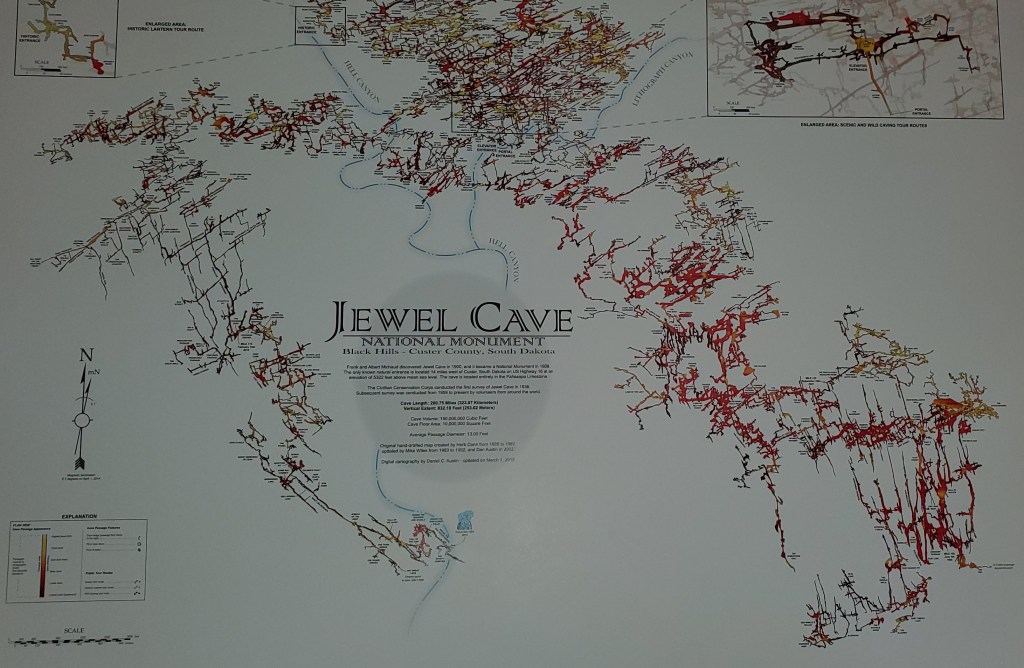
180 miles of caves are mapped in Jewel Cave making it the 3rd longest cave system in the world 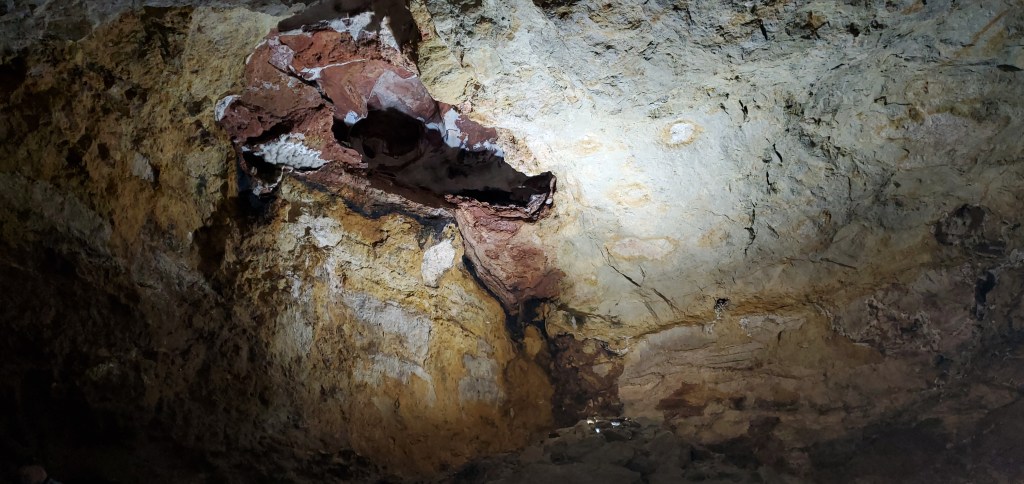
Minerals color the walls of the cave. The dark hole is just that, an opening to another room. 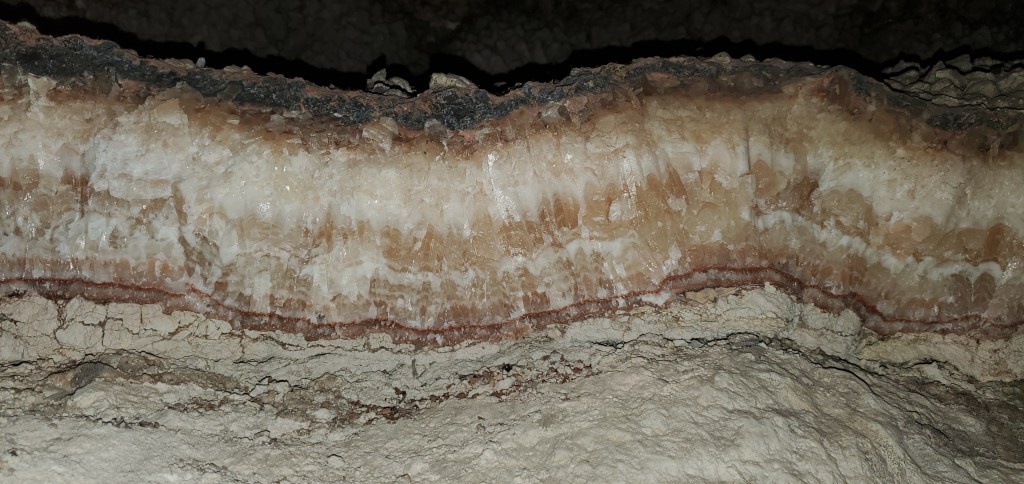
Crystals that are pretty much like the edge of a broken geode 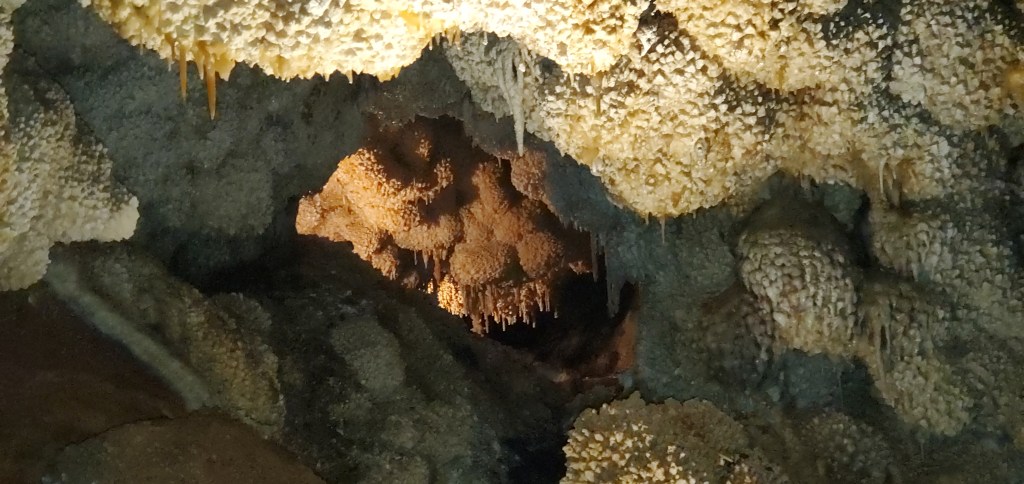
Popcorn and a few draperies or stalactite-like formations 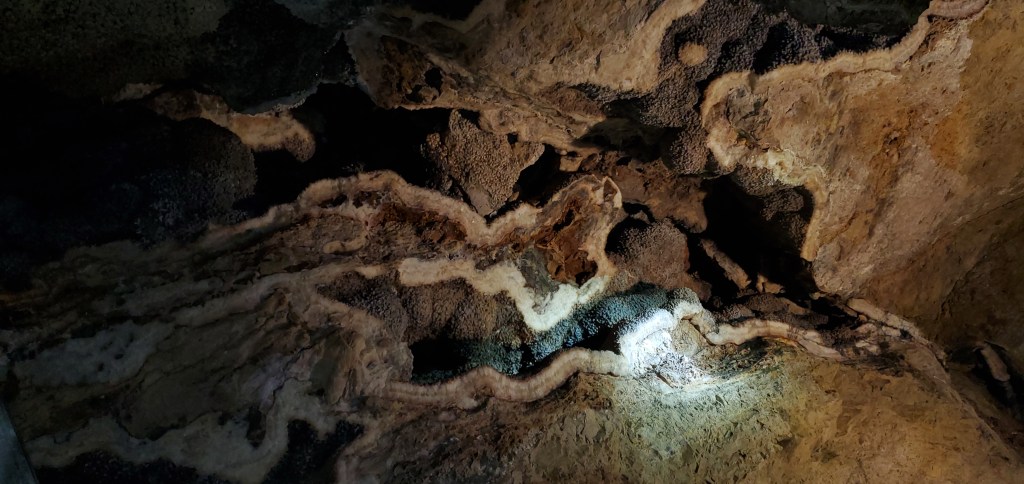
Another edge of these geode-like slabs that were broken up in most of the rooms of the cave
Wind Cave National Park: May 28
OK, I have to admit, I thought this was the most boring cave I have ever seen. We walked down millions of stairs, stopped in 3 medium rooms full of rocks basically taking a hike underground with very little amazing features that we usually see in caves. The cave’s main claim to fame in formations is the Boxwork, which has one of the largest amount of these formations in the world. “Boxwork is made of thin blades of calcite that project from cave walls and ceilings, forming a honeycomb pattern.” (NPS website)
As you can see from the excessive number of photos of Wind Cave NP, I was very impressed…perhaps if I was a true cave explorer and was interested in crawling around on my belly through little tiny holes with a flash light. Yeah, right 😉
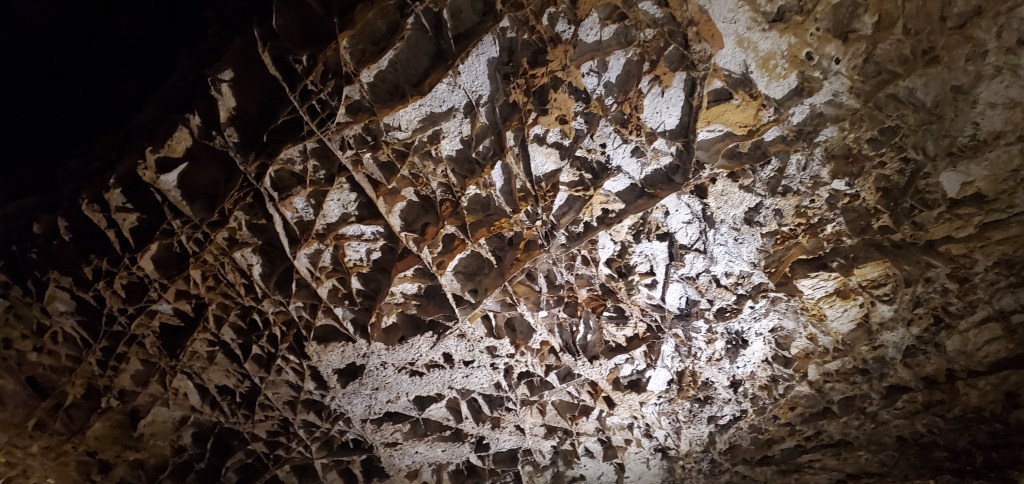
Wind Cave Boxwork
The Mammoth Site, Hot Springs, SD: May 28
The Mammoth Site is an active palentological dig where you walk around the rim (and down into it) of a sinkhole pond that entrapped over 60 mammoths, camels, short-faced bear and other animals. The site was discovered when the area was being excavated for a housing development. The son of the bull dozer driver was interested in geology and contacted his former professor at Chadron State College, who immediately recognized the signifcance of this find. Apparently, the developer of this land also agreed the find was signifcant and willingly moved his housing development to another area. The Mammoth site is designated as National Natural Landmark by the US National Park Service.

The entire sink hole is protected within the museum building 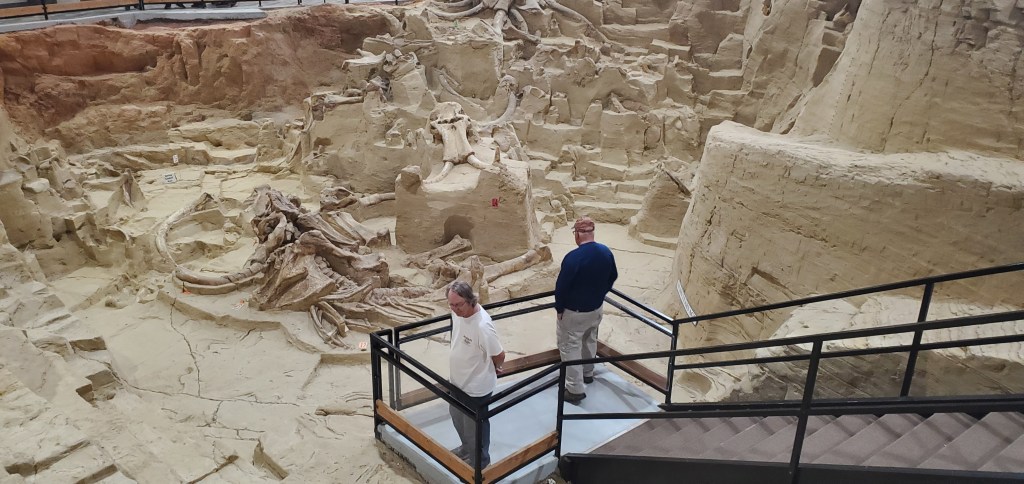
Rick and Tom in the middle of the sink hole 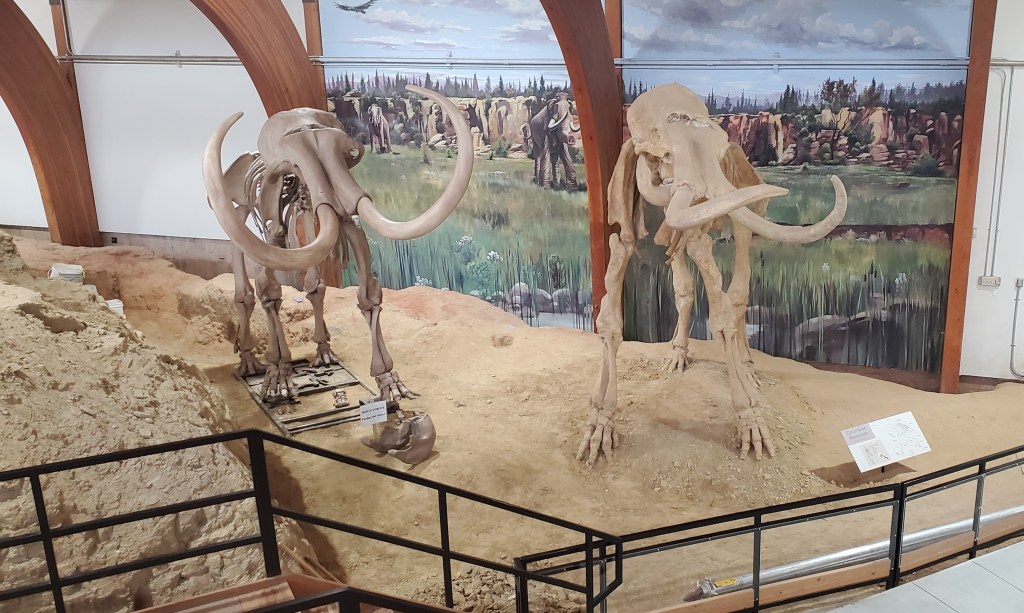
Mock up of mammoths with their bones in tact
 The Traveling Lounsburys