While we have visited many of the monuments and memorials in Washington DC over the years of vacationing in the area to see Tom’s family, I wanted to focus this visit on seeing many of the National Park sites in the area. We also visited the National Museum of African American History and Culture as well as the Supreme Court and the Library of Congress.
April 24: We enjoyed a beautiful day with Tom’s brother, Alan and his wife, Robin and our sister in-law, Carla, as we walked over 7 miles around the monuments in search of the elusive National Park Passport stamps for each of the monuments surrounding the Lincoln Memorial Reflecting Pool.
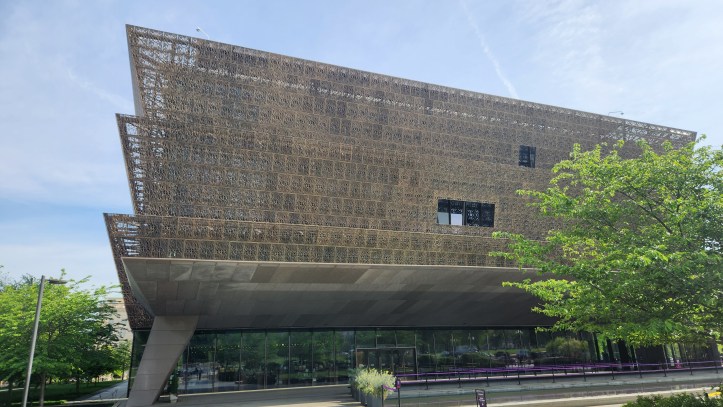
National Museum of African American History and Culture 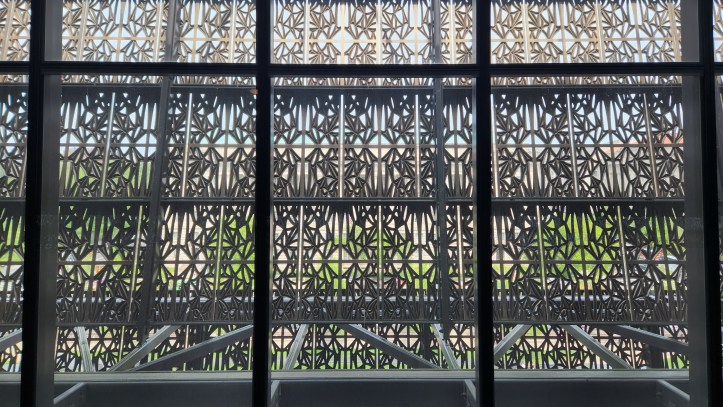
View from inside at the National African American Museum of History and Culture 
Washington Memorial 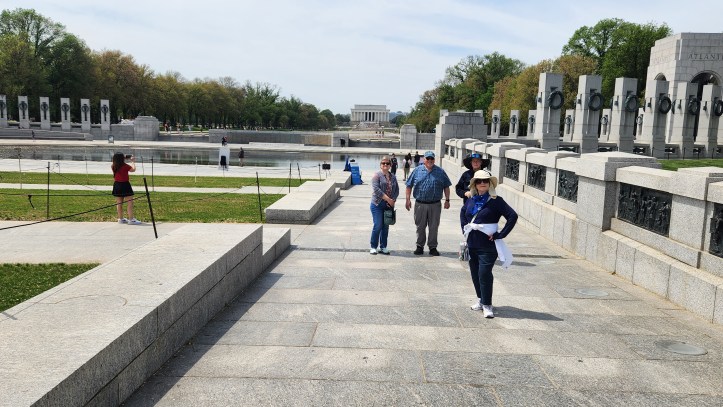
View down to Lincoln Memorial from the WWII Memorial with the family posing 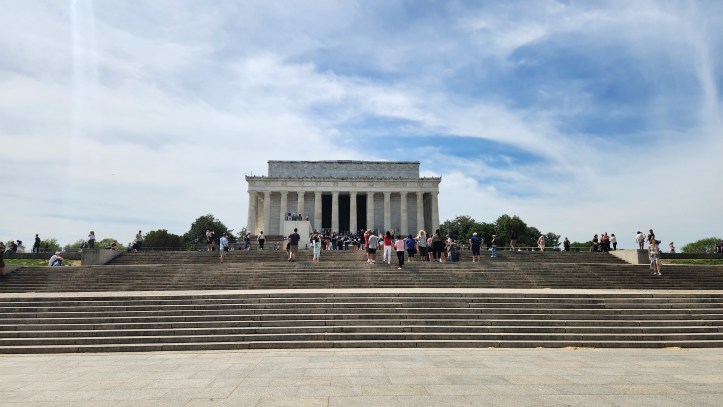
Lincoln Memorial 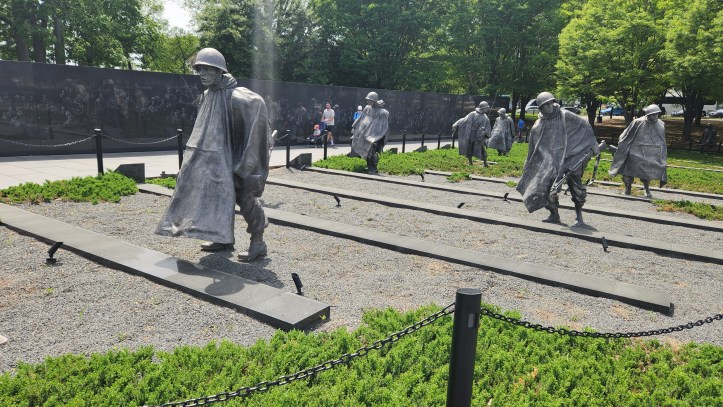
Korean Memorial-I find it somewhat unnerving how life-like the expressions on the soldiers’ faces are. 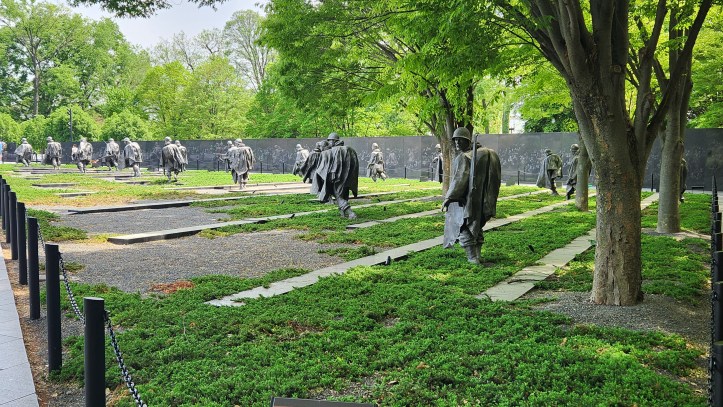
Korean Memorial – Look at the soldier looking back at me! 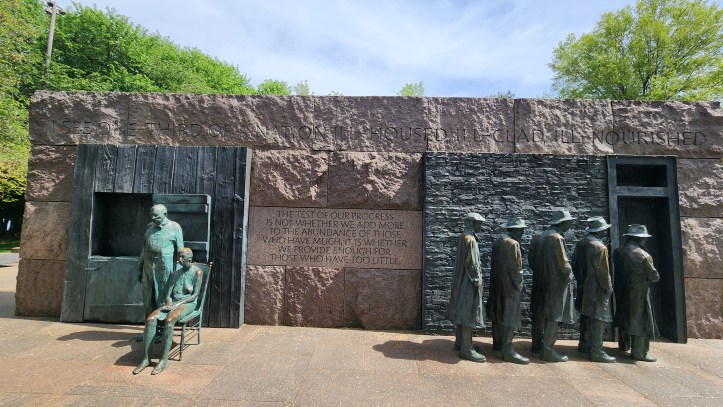
FDR Memorial-first room with focus on the Depression 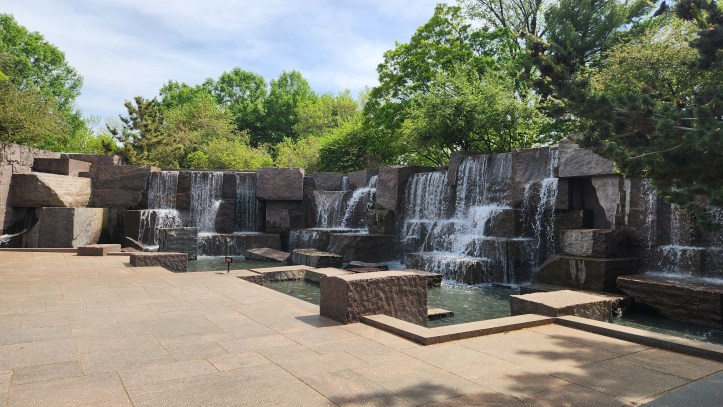
FDR Memorial-3rd room with water falls 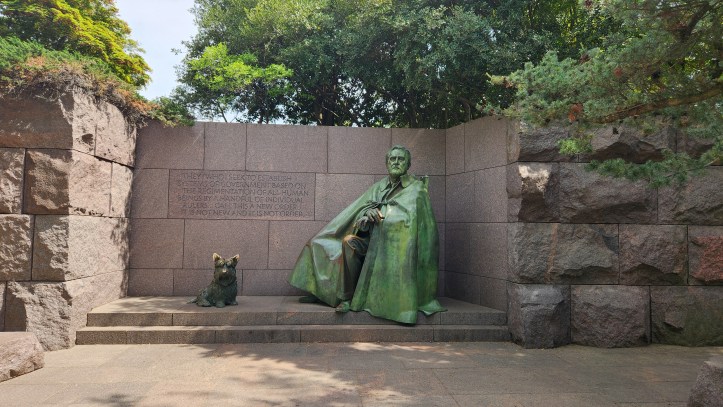
FDR Memorial-Franklin Delenor Roosevelt with his little Westie 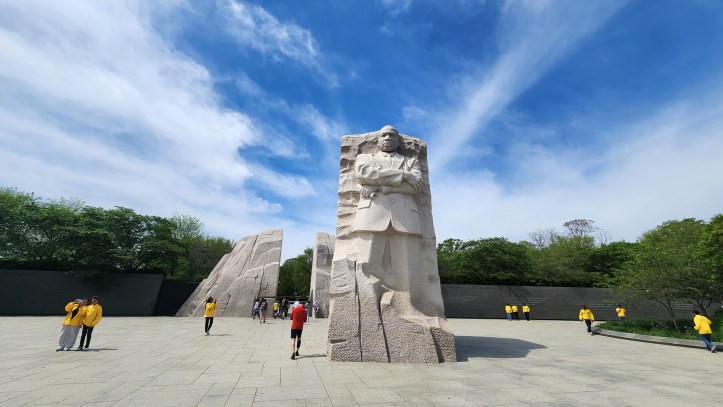
Martin Luther King Memorial – the folks in the yellow jackets was a group of visitors 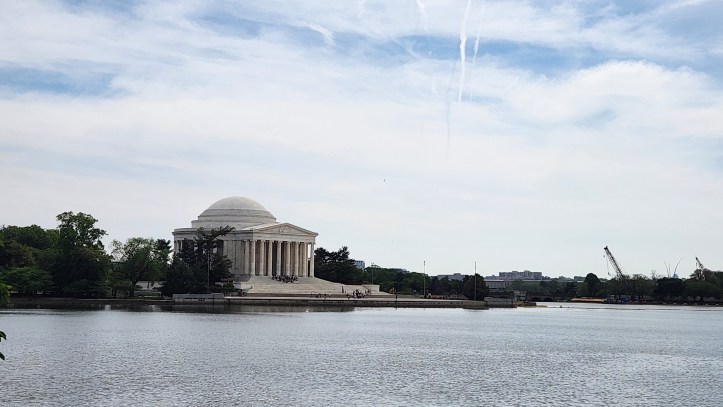
Jefferson Memorial across from Tidal Basin 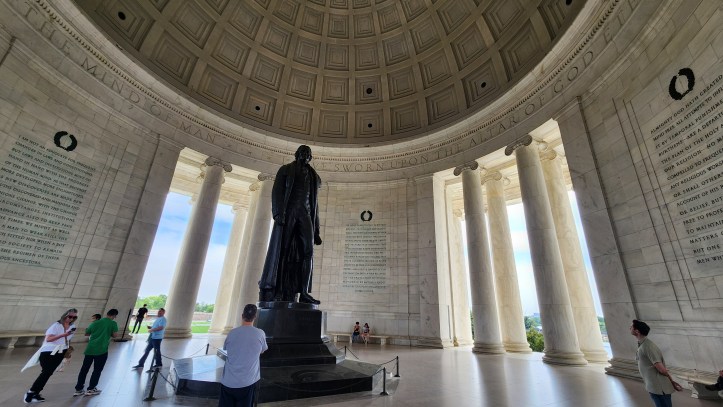
Inside Jefferson Memorial 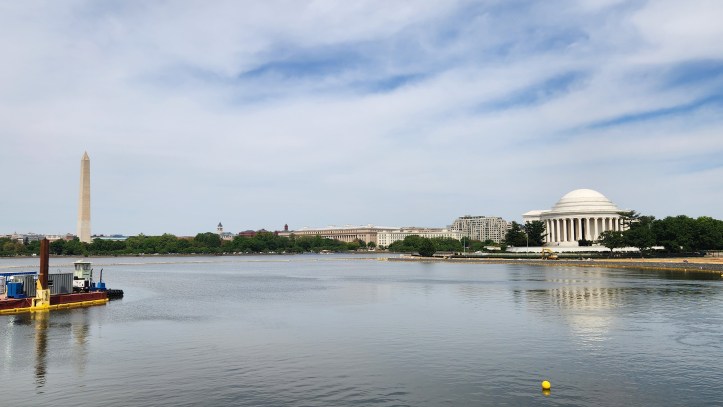
Memorials from Edge of Tidal Basin
April 25: Additional family joined us for a visit to the Supreme Court where we were able to listen to a talk on how the Supreme Court works (they don’t let you take photos inside the actual Supreme Court, so I took a photo of a model). Then we popped over to the Belmont – Paul Women’s Equity National Monument where Alice Paul and the NWP developed innovative strategies and tactics to advocate for the Equal Rights Amendment (ERA) and equality for women. Interestingly enough, the ERA was never fully ratified as an amendment to the contitution. Then we walked over to the Library of Congress (Thomas Jefferson Building) for a wander through the beautiful central Great Hall, the Reading Room and a number of additional exhibits.

Supreme Court 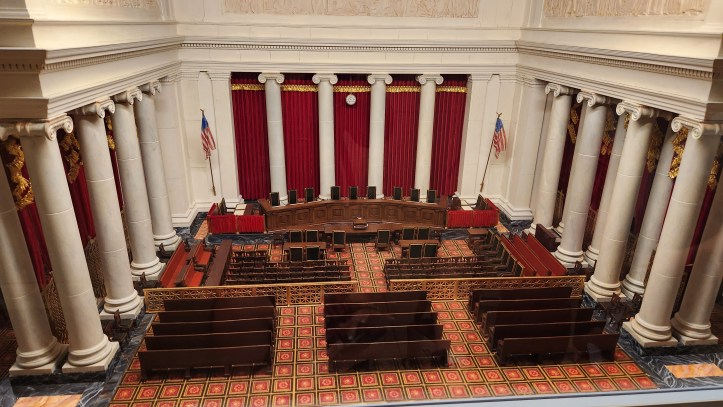
Supreme Court Chamber 
Three Branches of the US Government Overview – we all can use a reminder 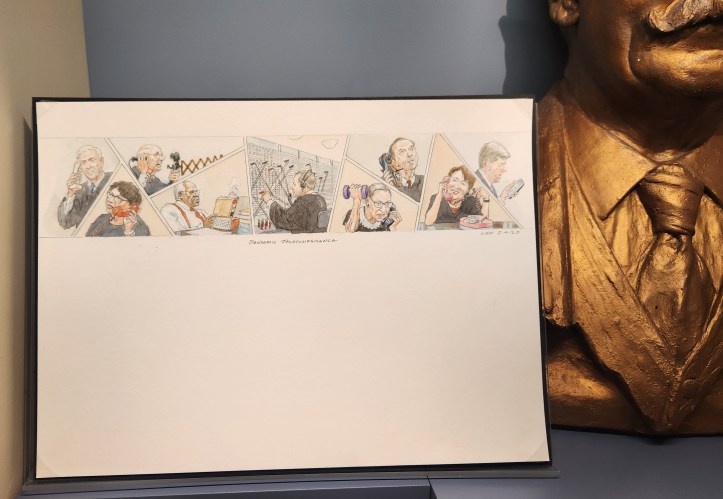
Cartoon of Judges Communicating with Each Other During Covid 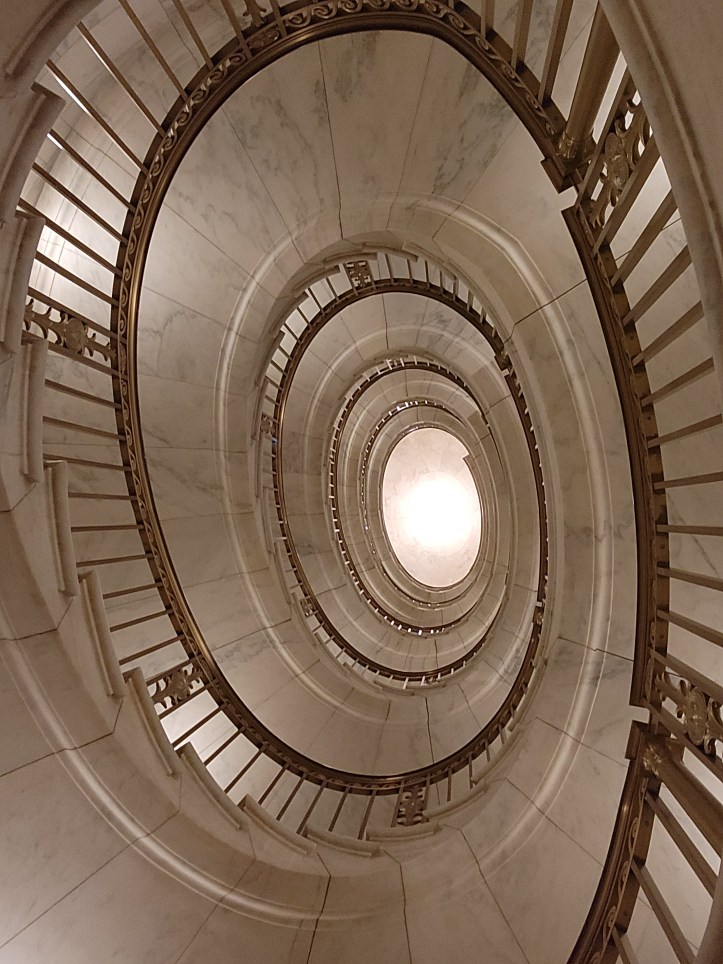
Supreme Court inner Stairway, no longer used, but pretty cool 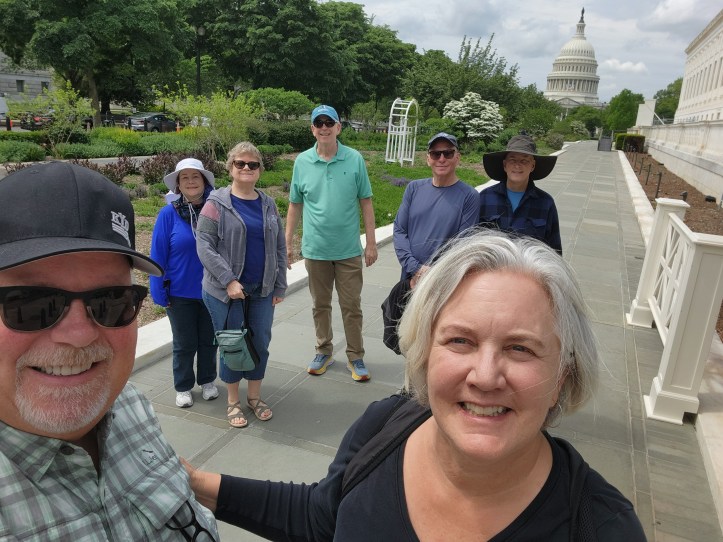
The Family Enoying the Outing 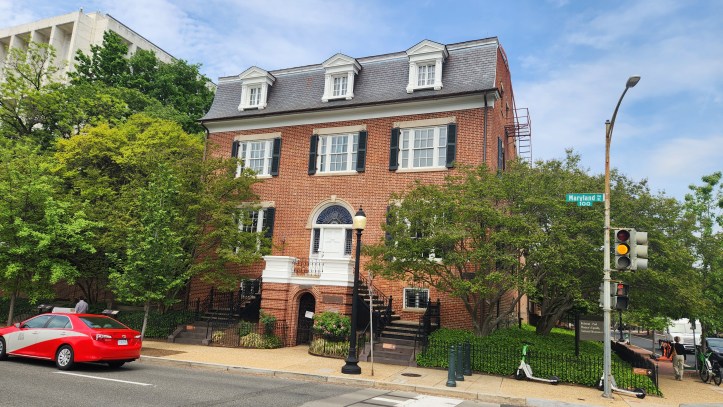
Belmont-Paul Women’s Equality National Monument 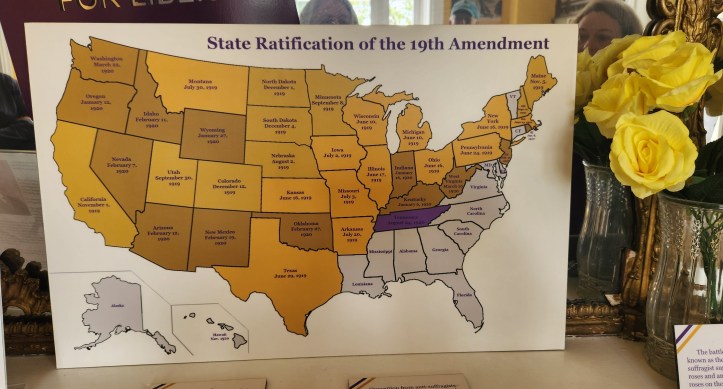
Status of States Ratifying the Equal Rights Amendment 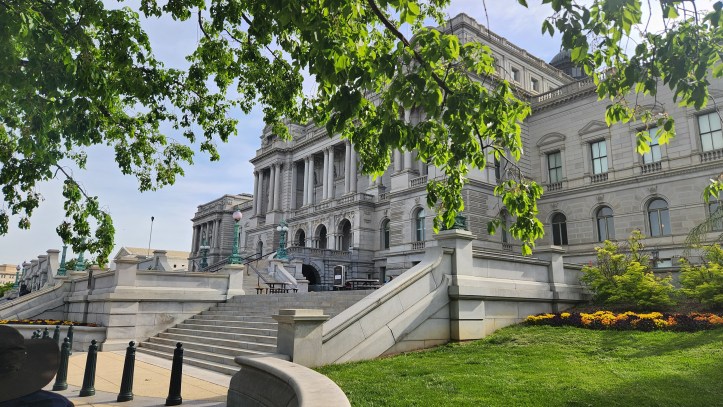
Library of Congress 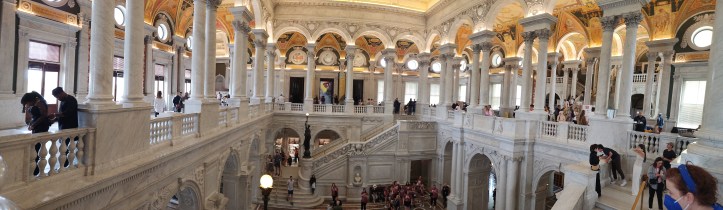
Library of Congress Great Hall 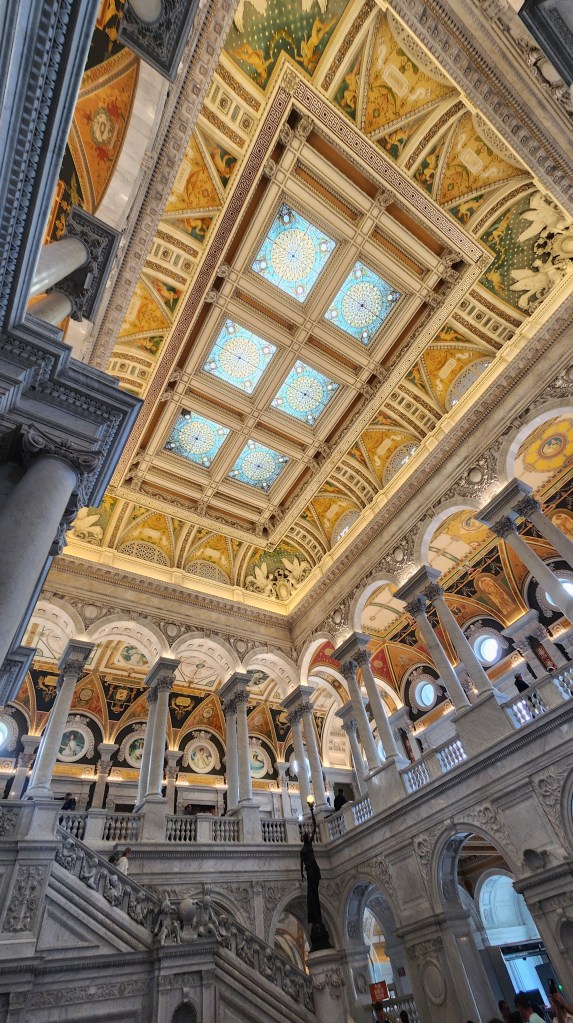
Library of Congress Ceiling 
Library of Congress Reading Room 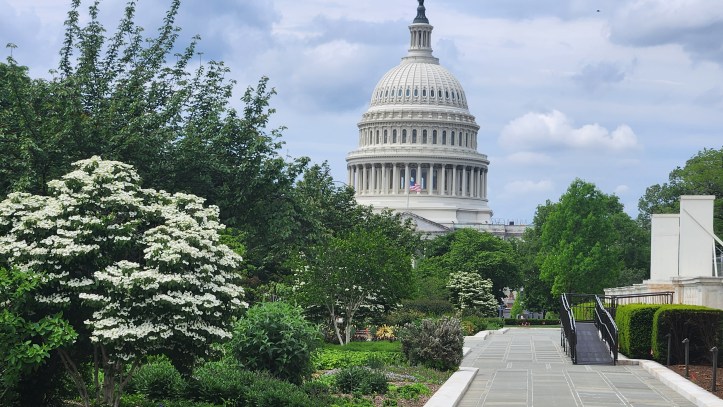
United States Capitol 
United States Capitol
April 26: We were able to pick up a few outlier National Park Sites. Our first stop that morning took us to the Wolf Trap National Park for the Performing Arts, which a benefactor donated nearly 100 acres of her personal farmland to the United States Department of the Interior, as well as the funds to build the large outdoor amphitheater, now known as the Filene Center. This land was donated with the express intent to develop the Wolf Trap National Park for the Performing Arts.
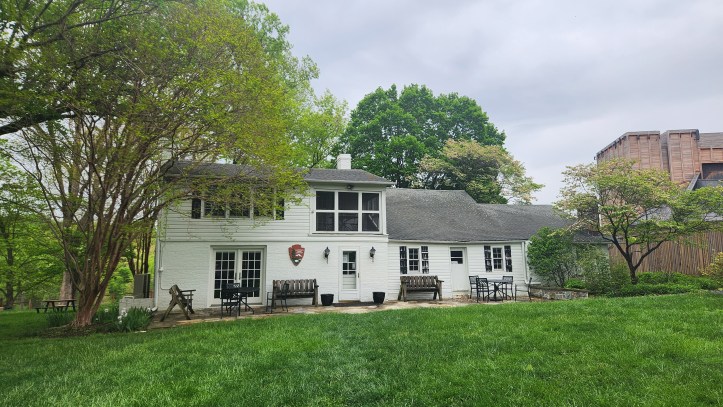
Former Farmhouse at Wolf Trap – the performance area is to the right in the photo
We then headed out to Maryland to visit the Clara Barton National Historical Site and Glen Echo Park on the Maryland side of the Potomac River, which is right next to the Clara Barton property. Clara Barton started her career as a schoolteacher and started the first public school in the USA in New Jersey in 1852. Her career shifted in the Civil War when she started tending to the wounded on the battlefield, which was a new concept. She eventually started the American Red Cross.
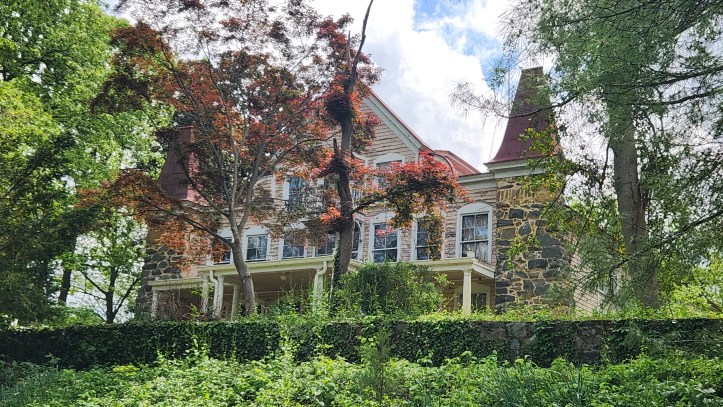
Clara Barton House
Glen Echo Park started its life as one of the few Chautauqua Parks that gained popularity in the late 1800s. It was not successful in this particular area and eventually transitioned into an amusement park with much of the iconic buildings built during the 20’s and 30’s, thus the art deco design. The popularity of Glen Echo Park as an amusement park partially due to entertainment available in other areas and civil unrest in the 60’s, the park closed in 1966. In 1970 the park ownership with transferred to the National Park Service, which lead to a slow revitalization and renovation of some of the iconic art deco buildings, carousel and ballroom. Other buildings house art galleries and art programs. It is an interesting microcosm of our entertainment history over the past century.
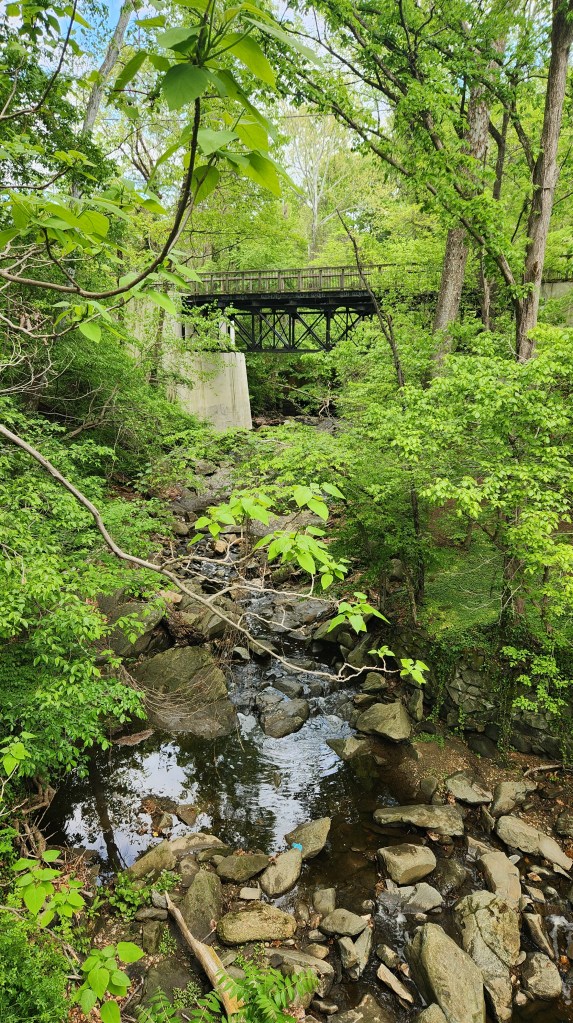
Glen Echo Park 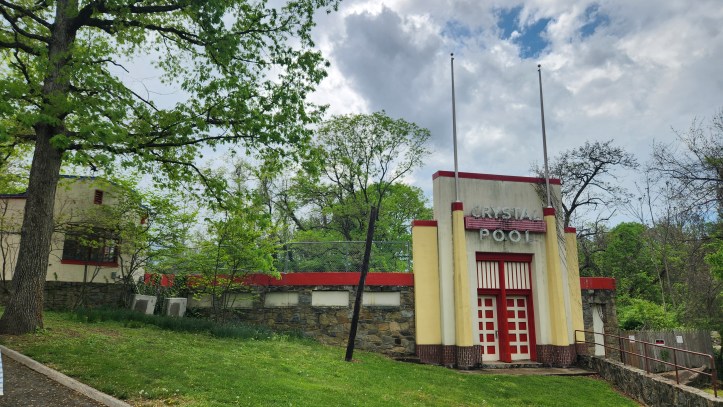
Glen Echo Park Swimming Pool 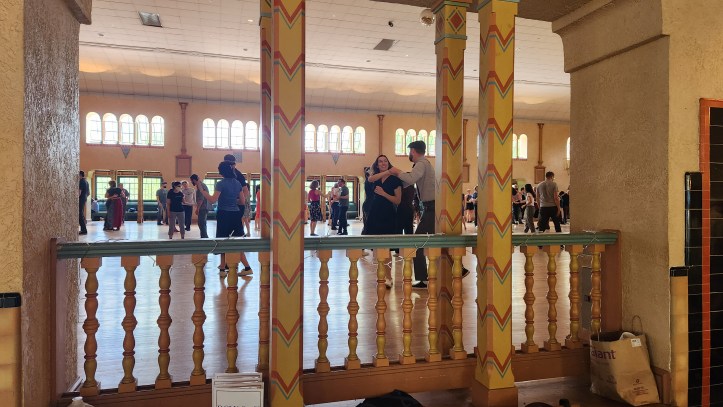
Spanish Ballroom at Glen Echo Park – there was a big dance event going on for the weekend in which one of our Colorado friend’s daughter was dancing! We just missed her! 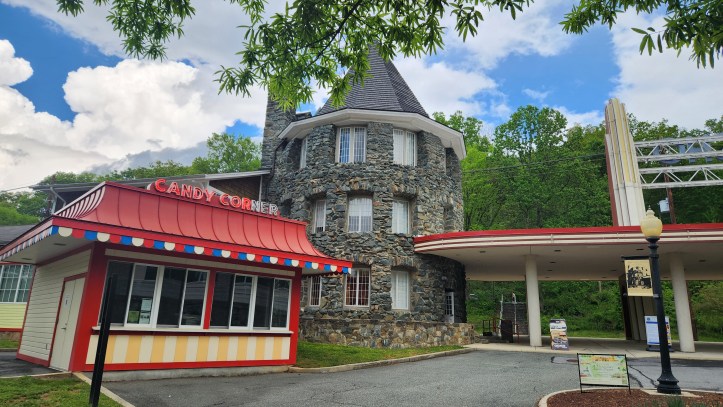
Glen Echo Park – the stone portion of the building dates back to the Chautauqua years 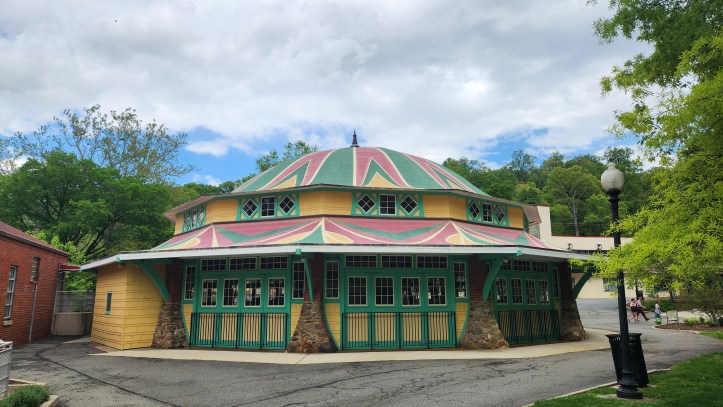
Outside of Carousel 
Carousel
 The Traveling Lounsburys
Wh
LikeLike