July 6 – 13, 2025: We left our spring volunteer gig at the Schoodic Institute in Maine on July 5th and headed up to Quebec for a week to follow the St. Lawerance River down to Montreal. Our trip was two-pronged, the first prong took us up to the tip of the Gaspe Peninsula for some hiking, a little biking and an outstanding boat trip out of Pearce to see the largest gannet bird colony in the Americas, plus unique views of the area’s geology. The second prong was centered out of Saint-Hyacinthe and down to Hatley, just SE of Montreal for genealogy site-seeing on both Tom’s and my side of the family.
I never even knew of the Gaspe Peninsula, but I found myself interested in this entire area after I voraciously read/listened to the entire Louise Penny murder mystery series featuring Commander Gamache and his fictional little town of Three Pines, located SE of Montreal. The books are set mostly in Quebec.
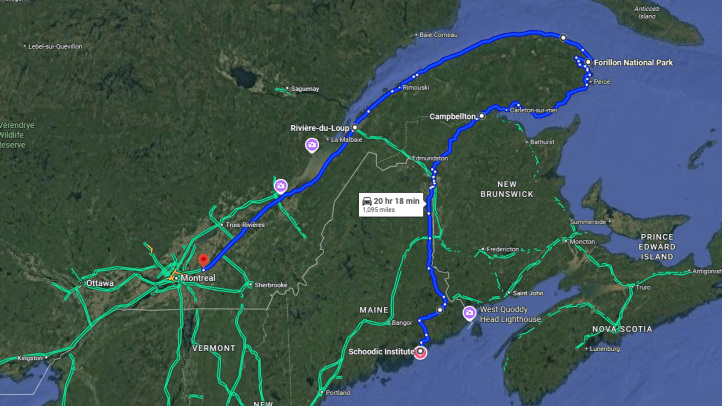
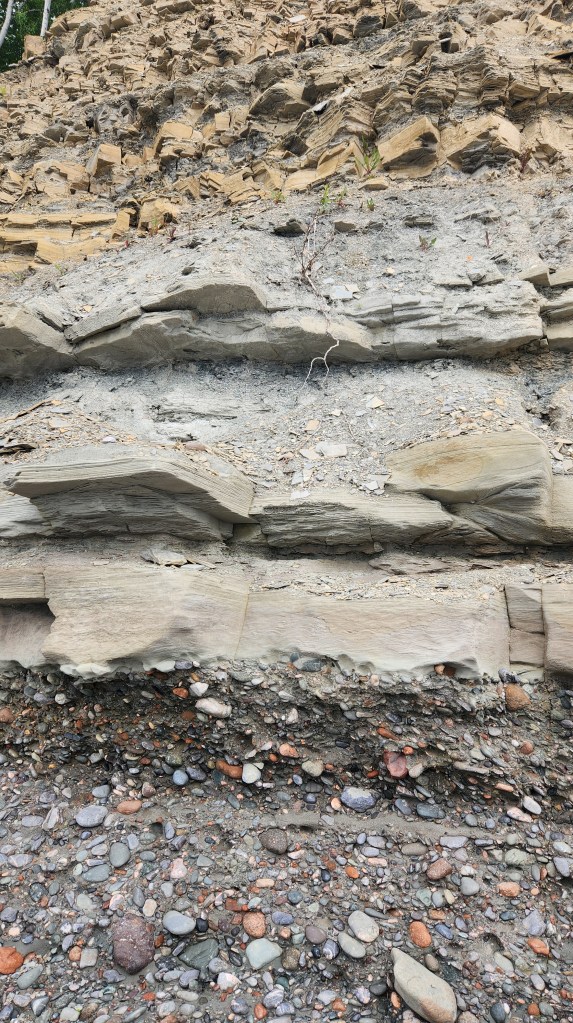
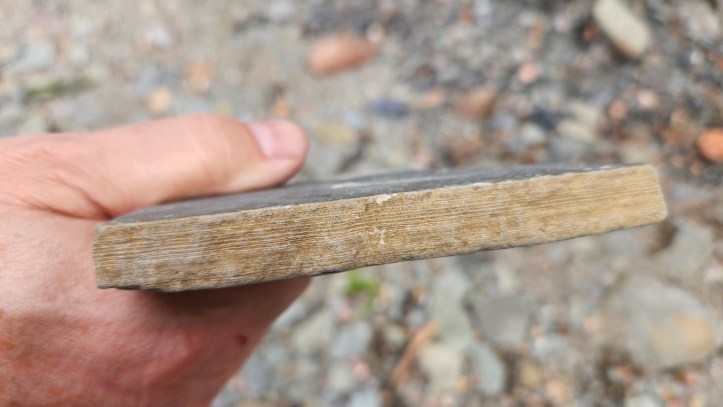
July 7 (Monday): We spent two nights in Campbellton, New Brunswick, in the Sugarloaf Provincial Park. The focus of this area is mountain biking on or around their ski area, which we tried out. Then we wandered across the river and ventured into Quebec and visited Parc National De Miguasha, a provincial park that preserved a huge layer of geological layers that include fossils from 380 million years ago.
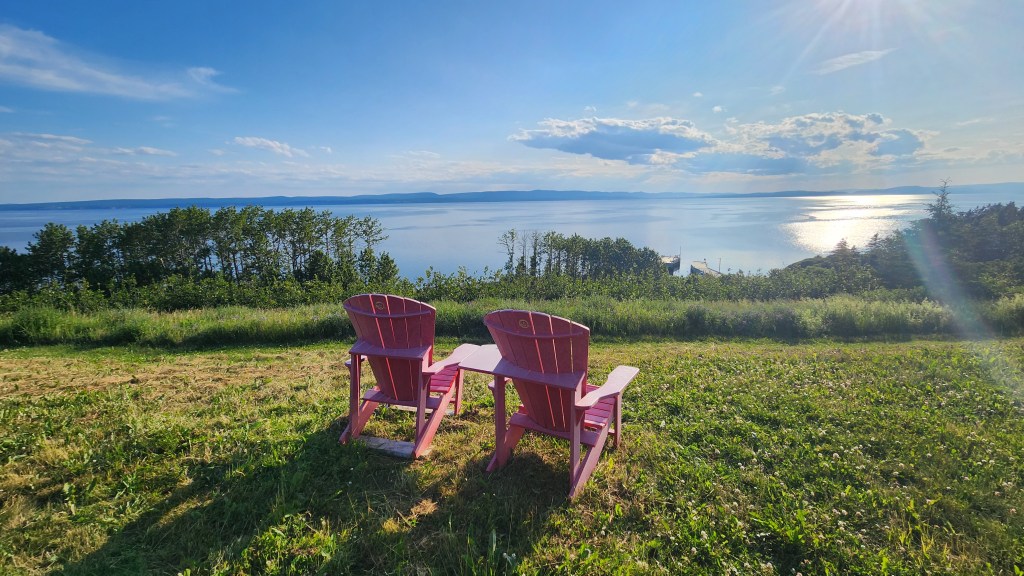
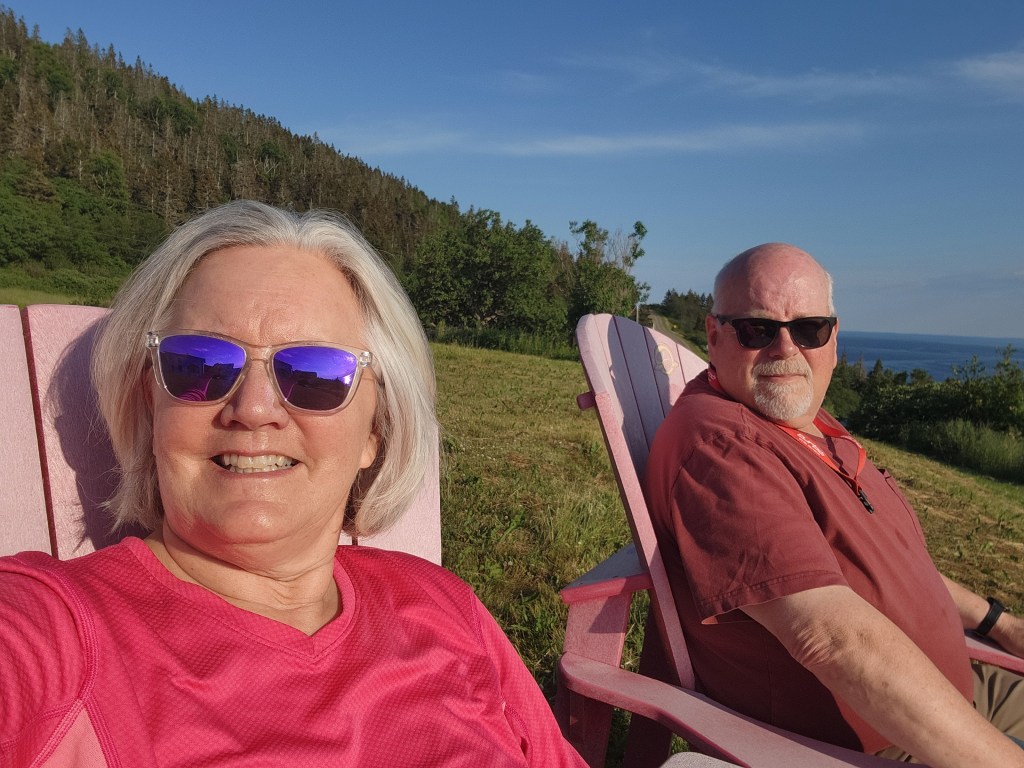
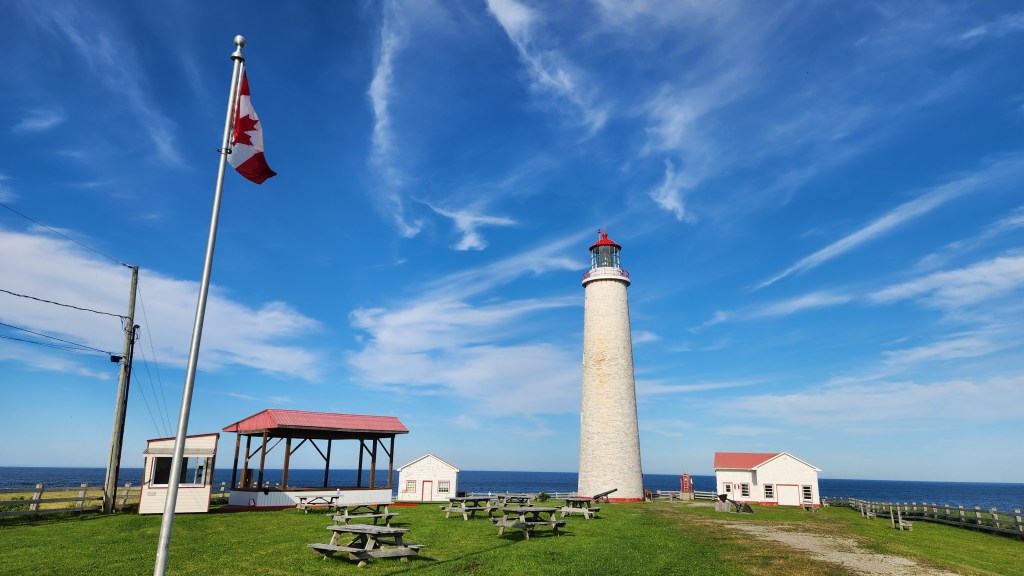
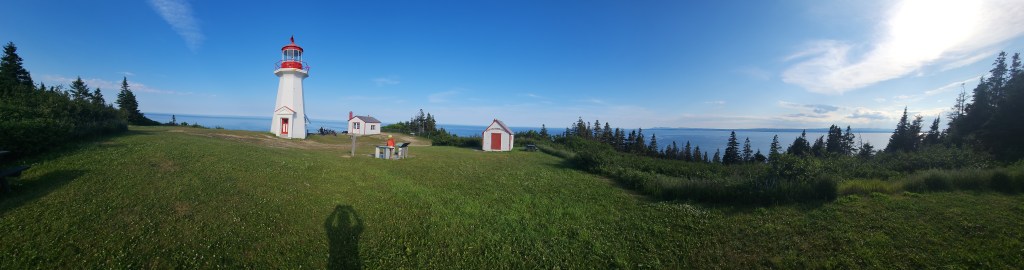
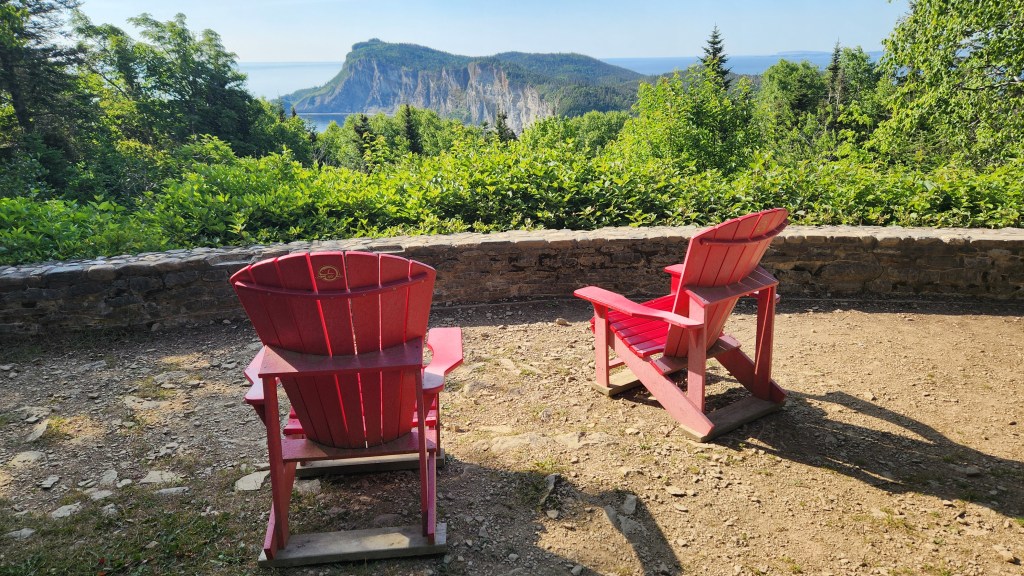
July 8 – 10 (Tuesday – Thursday): Forillon National Park is at the tip of the Gaspe Peninsula, which protrudes into the Gulf of St. Lawerence. Canadian National Park red chairs dot the scenic areas of the park, which are always fun to find. We hiked to the Mont Saint-Alban Tower for the distant views of the actual point of Cap Gaspe. There were two light houses, one at the tip of Cap Gaspe, which we rode our bike to, saving us 2 hours of a fairly boring hike. The second lighthouse is Cap des Rosiers as you leave Forillon NP.
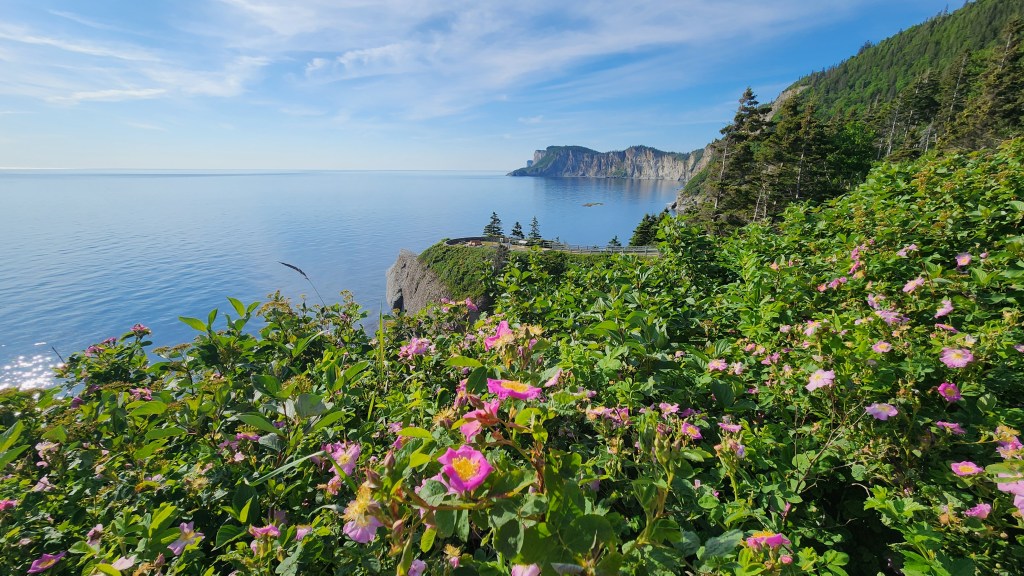
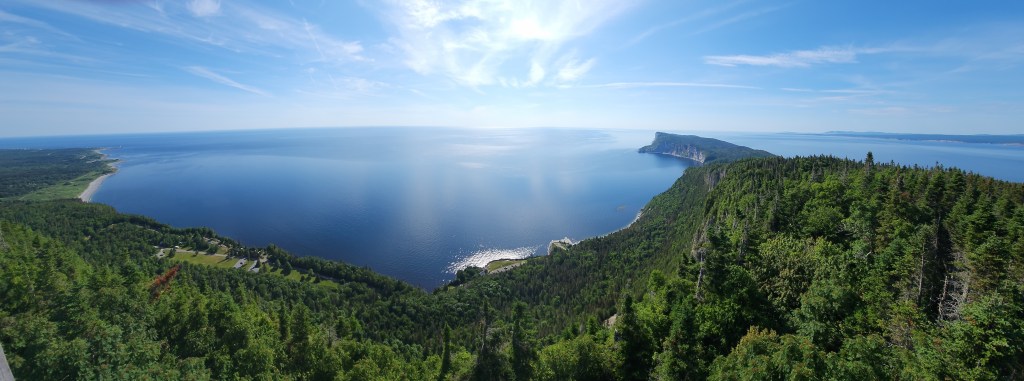
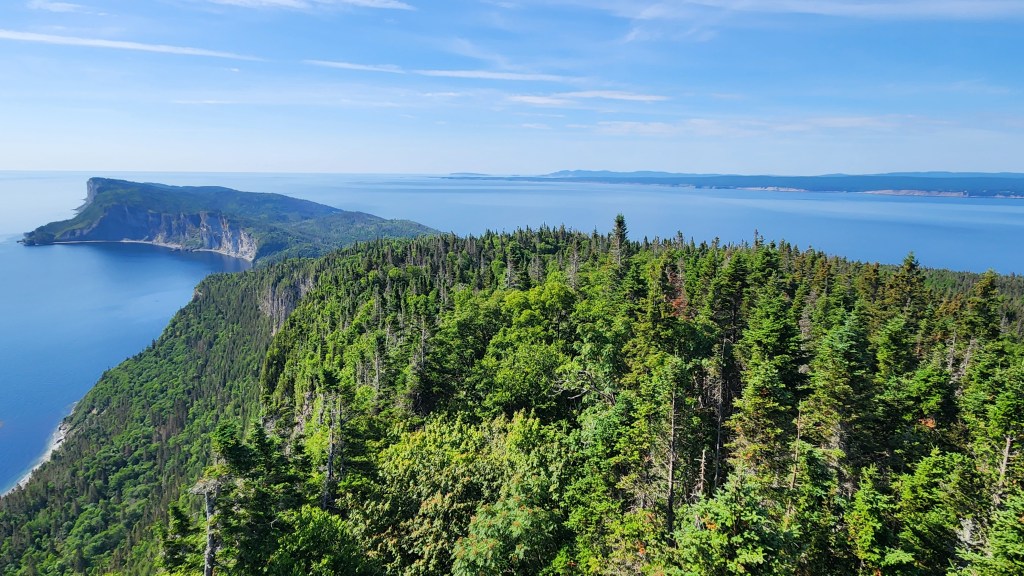
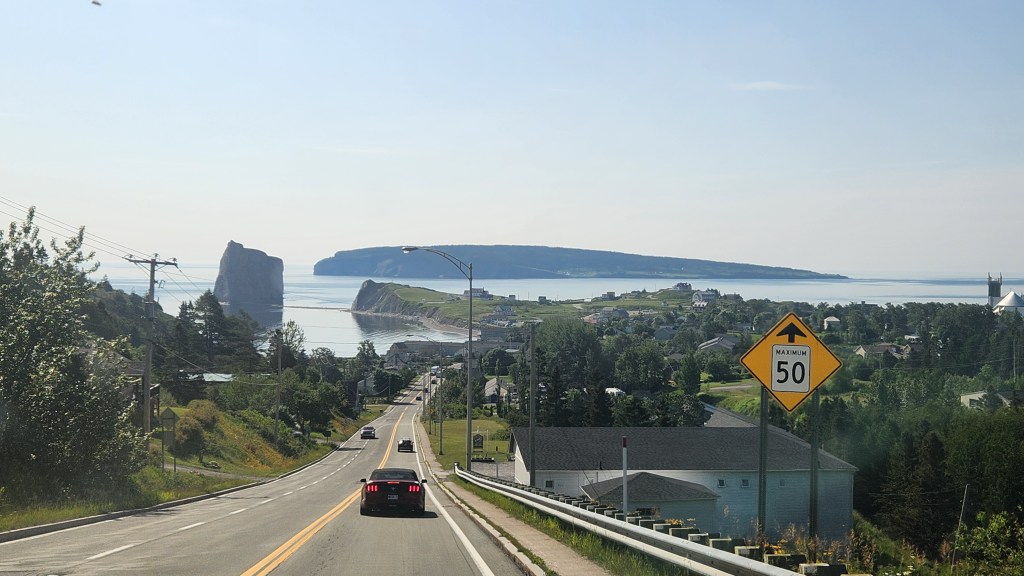
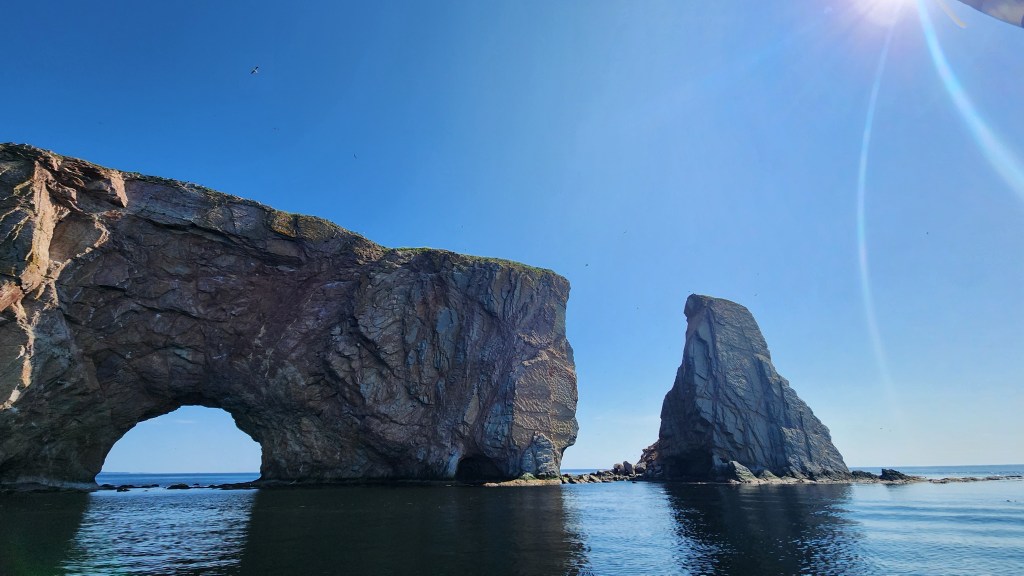
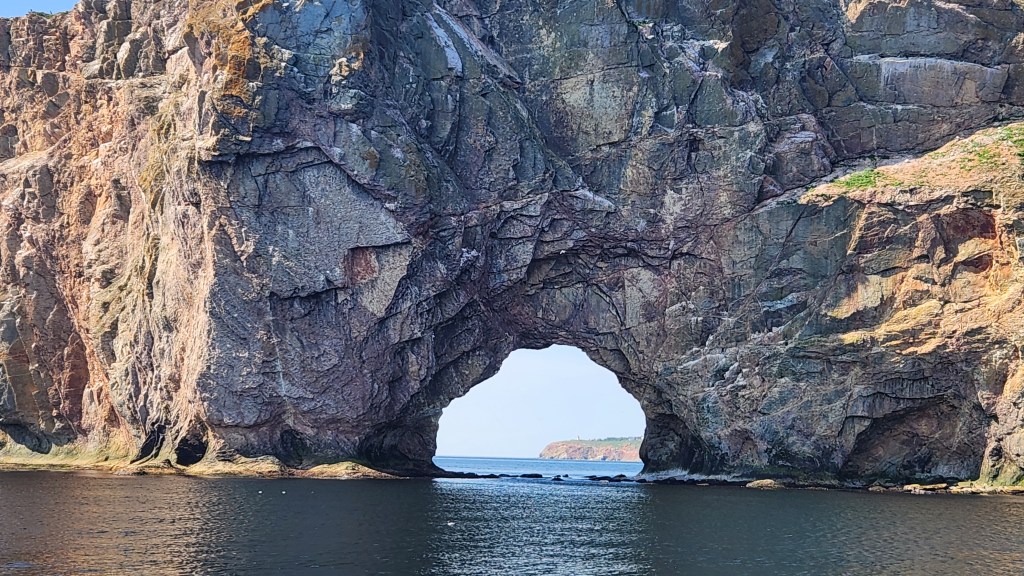
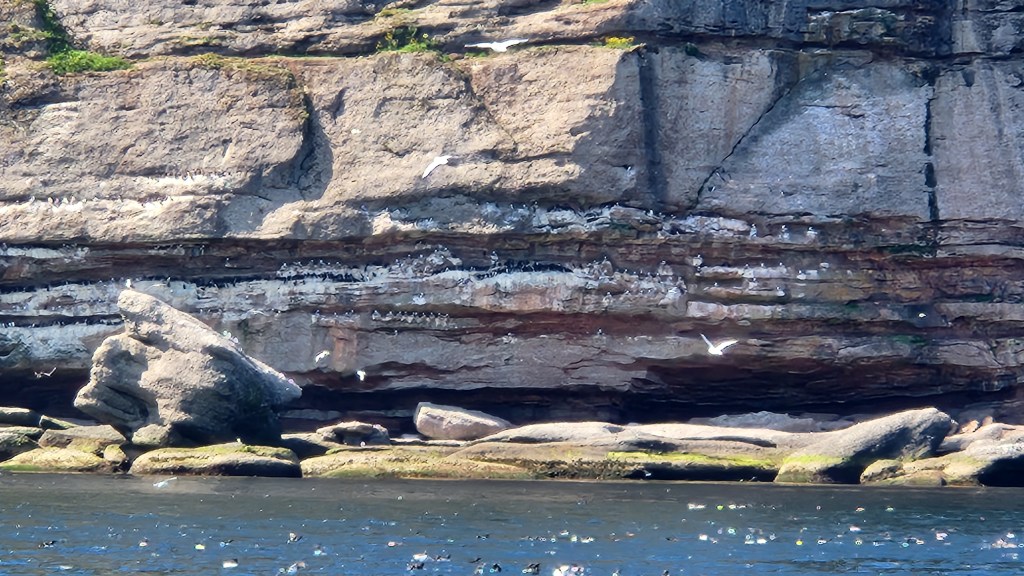
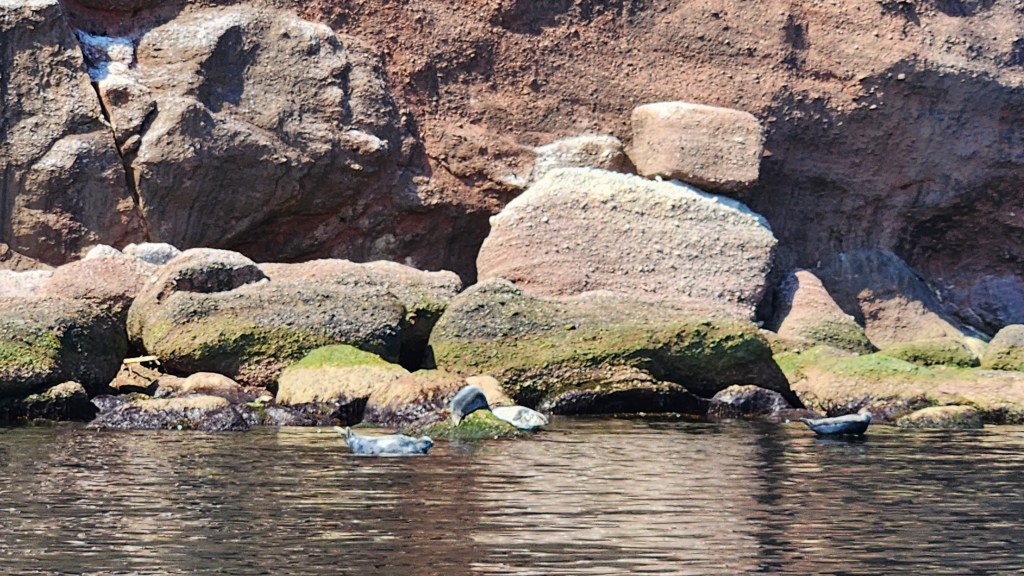
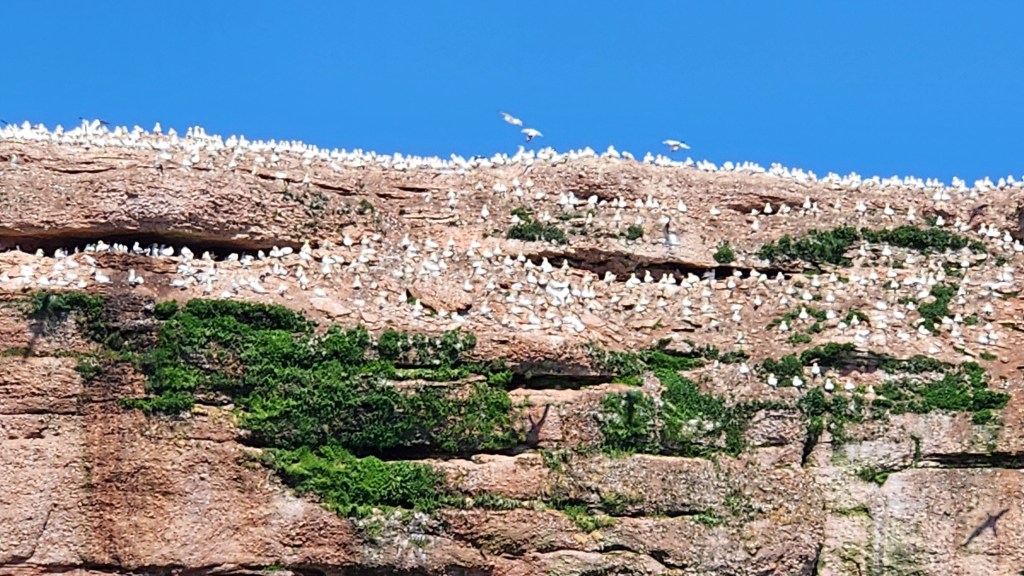
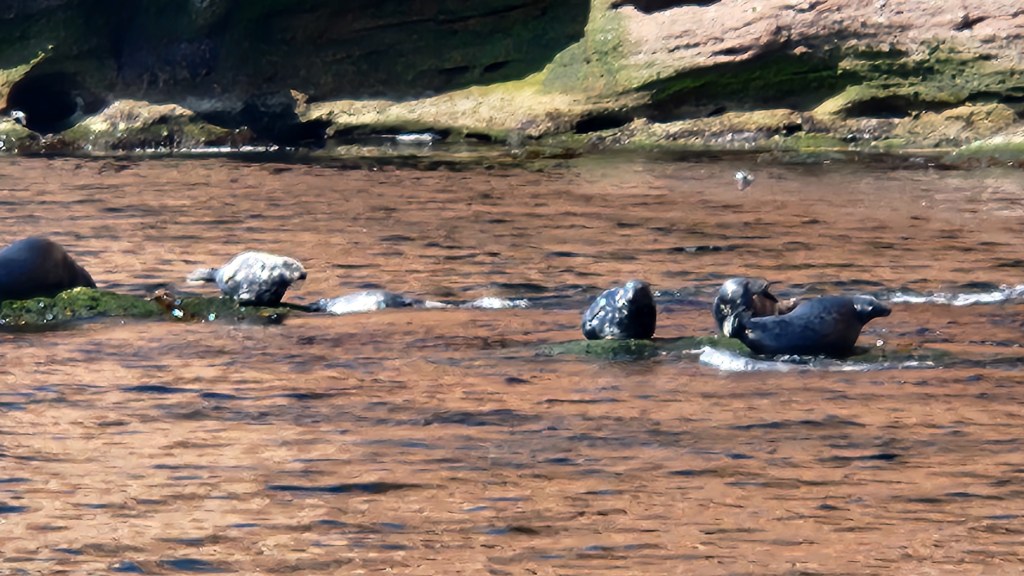
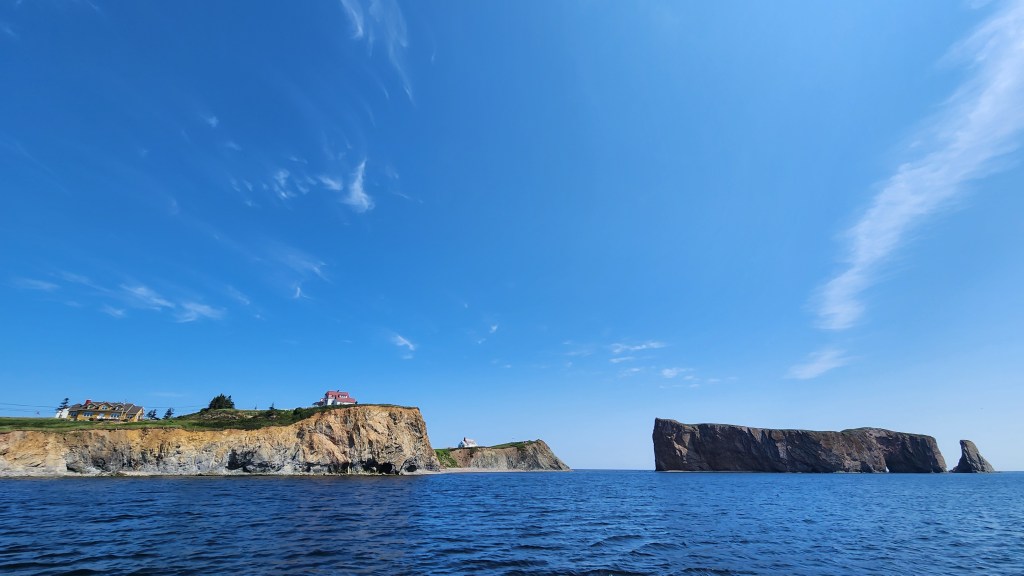
July 10 (Thursday): A day trip back tracking to Pearce further emphasized the unusual geology of the Gaspe Peninsula. It combined the huge, uplifted formations with the geological layers we learned about at Parc National De Miguasha. The island of Bonadventure has layers upon layers of different geological formations that provide nesting areas to a huge number of seabirds. This area boasts the highest number of Gannets as well as huge populations of Guillemots, Razor Bills, Kittiwakes as well as many others. There was also a healthy seal population.
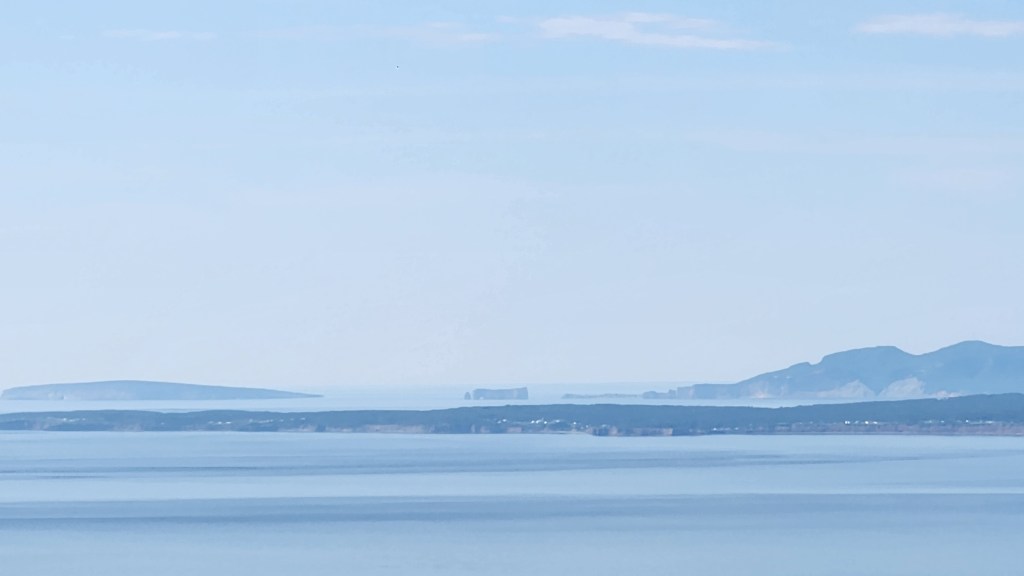
The previous day was so clear, we could see all the way to Pearce and the geological formations in that area.
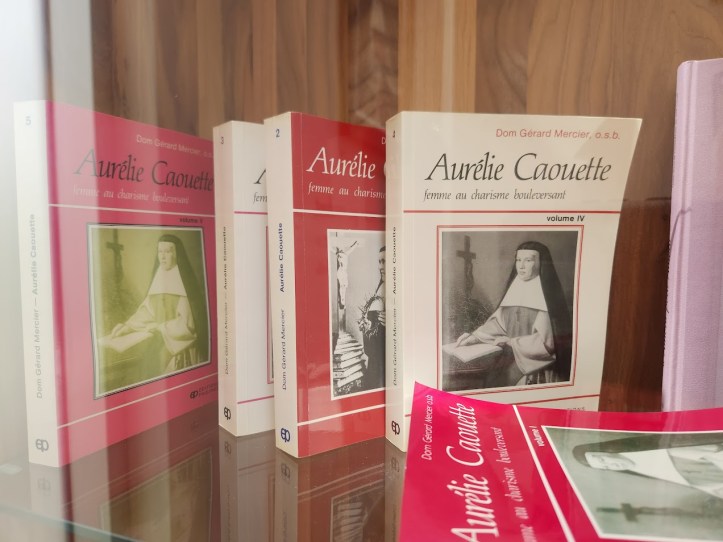
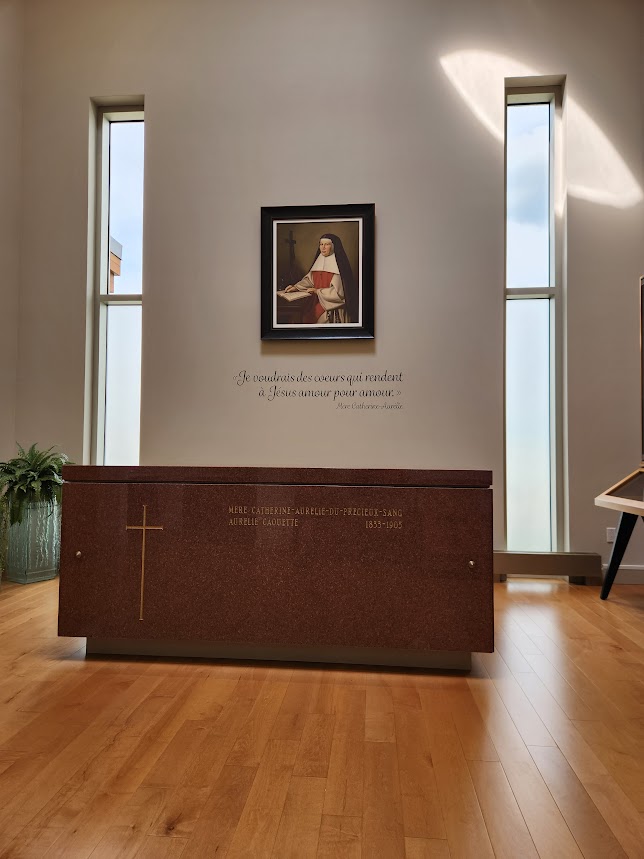
July 12 – 13 (Saturday & Sunday): We poked around the area of Saint-Hyacinthe, which is considered a very French part of Quebec. Somehow we found enough English speaking folks to help Tom sort out his numerous questions about Aurelie Caouette, Tom’s great great grandmother’s aunt, a venerated nun on the way to sainthood.
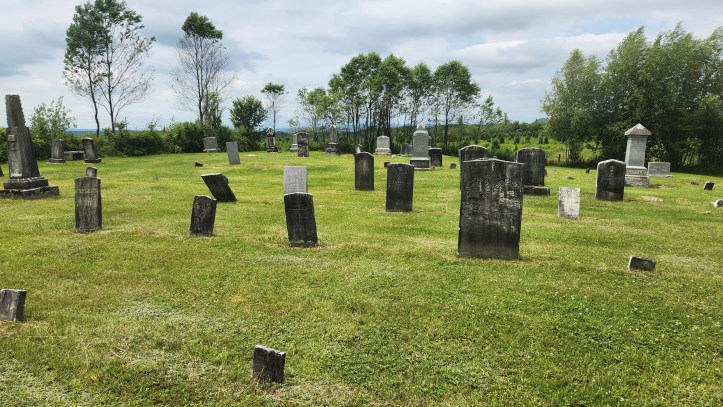
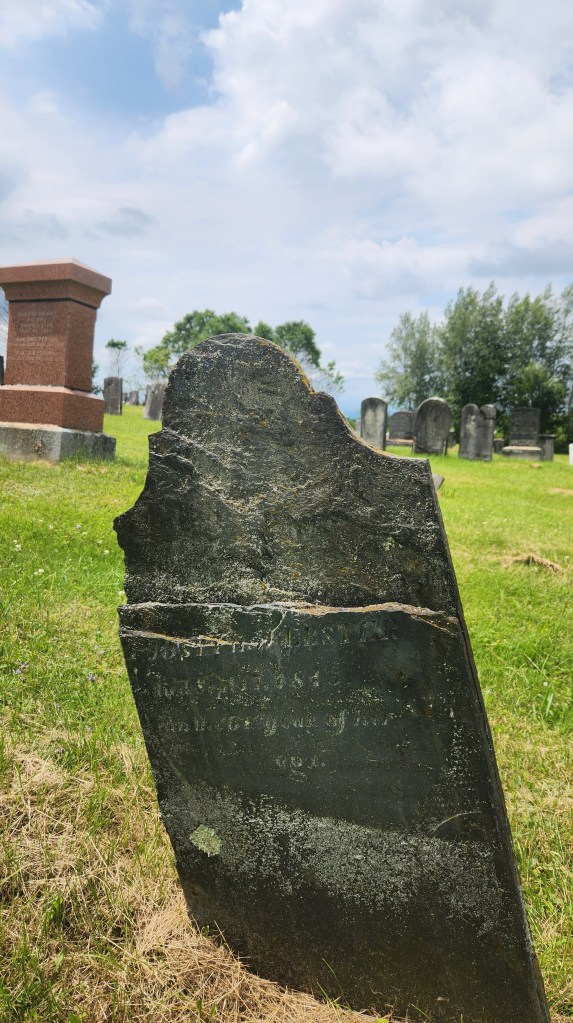
Our grave wandering was not complete. Tom believes he found Joseph Stanial Webster, my 4th great grandfather who fought in the Revolutionary War and then moved from New Hampshire to Hatley, Quebec. The grave stone is of Joseph Stanial Webster, but we aren’t 100% is the correct Joseph Stanial Webster.


Spectacular Photos. Enjoy your prolonged Trip !!
LikeLike